30-Second Overview
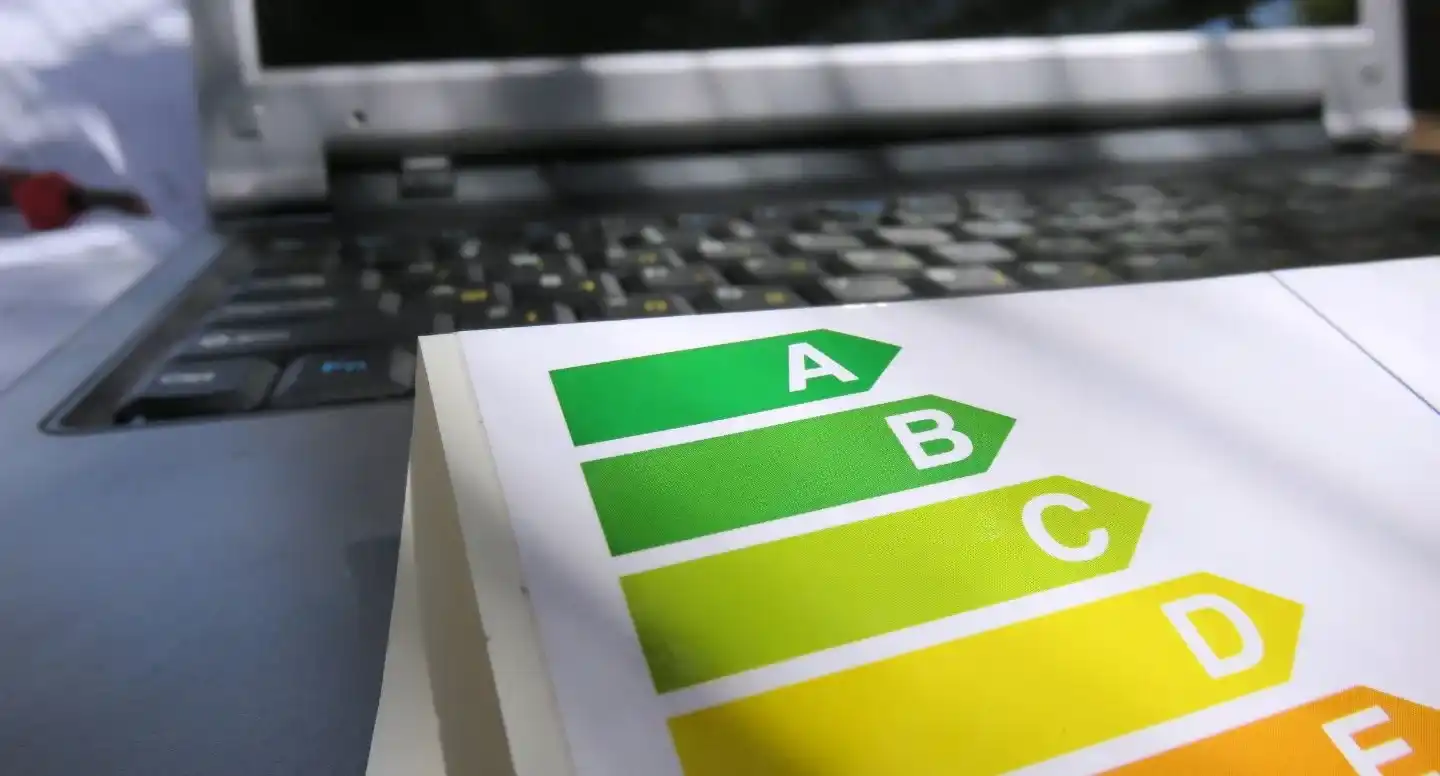
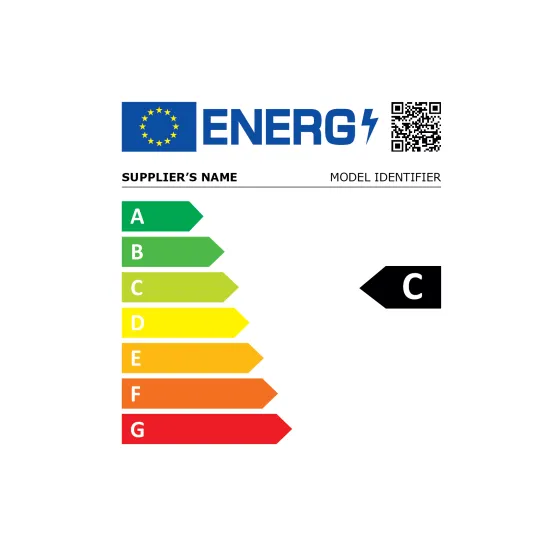
Energy efficiency labels help businesses and consumers understand how much energy appliances and equipment use. The values range from "A" to 'G". An “A” label means top efficiency, while “G” means the least efficient.
For Irish businesses, understanding these labels is key to reducing usage, meeting compliance standards, and supporting sustainability goals.
What are Energy Efficiency Labels?
Energy efficiency labels are standardised ratings, introduced across the EU (and in Ireland via SEAI), that show how energy-efficient a product is.
- Ratings run from A (most efficient) to G (least efficient).
- Products covered include fridges, lighting, washing machines, air conditioning, and commercial equipment.
- Labels include annual energy consumption figures (kWh per year, for example), noise levels, capacity, and other performance data.
Which Energy Rating Is Best: A or G?
The scale is straightforward - "A" is the best (lowest energy use, most efficient) and "G" is the worst(highest energy use, least efficient).
But it’s worth noting:
- Not all “A” products are equal - some are “A+++” under older schemes, while the EU has recently rescaled labels back to A - G for clarity.
- As technology improves, today’s A may be tomorrow’s B.
- For businesses, aim for A or B-rated equipment wherever possible.
- The higher upfront cost is usually offset by lower running costs.
The Difference Between A and B Energy Efficiency Labels
The difference between A and B labels may seem small. However, in practice, it can mean 10% - 20% more energy consumption per year. For businesses running multiple appliances, that difference adds up quickly.
- Example: A commercial fridge with an A-rating may use 280 kWh per year, while a B-rated fridge may use 340 kWh/year.
- Over a 10-year lifespan, that’s an extra 600 kWh, which equates to several hundred euros in additional costs.

Why Businesses Should Pay Attention to Equipment Efficiency?
While households benefit from energy-efficient appliances, the stakes are even higher for businesses. This is because:
- Operational cost savings: energy-efficient equipment reduces business electricity and gas bills.
- Compliance: businesses must meet EU and Irish efficiency standards when buying or selling regulated products.
- Sustainability goals: choosing higher-rated products lowers carbon emissions, supporting ESG (Environmental, Social, and Governance) reporting.
- Customer perception: adopting greener technology strengthens your brand reputation
How to Use Energy Labels in Business Energy Procurement
When your business is purchasing new equipment:
- Check the label: Look for the energy class and annual consumption.
- Calculate lifetime costs: Consider energy bills over 5-10 years, not just the upfront price.
- Factor in carbon reporting: Higher-rated products support sustainability goals.
- Stay compliant: Retailers and suppliers are legally required to display accurate labels in Ireland.
How can Utilityfair help Businesses Save on Commercial Energy Costs?
Utilityfair helps businesses across Ireland reduce energy costs and simplify energy management - it's completely free. We do this by:
- Comparing all energy suppliers to find the best available rates tailored to your usage.
- Once you have chosen your preferred option, we instruct suppliers to move you to better rates hassle-free, saving you time and money.
- Monitoring your new contract end date to make sure that you never roll into expensive variable rates.
- In a nutshell, we simplify energy contract management, so you can focus on running your business.
👉 Get Started Today!
Fill out our enquiry form, click the link below or call 01 547 0999 to speak with a Utilityfair energy expert and start saving.




Frequently Asked Questions (FAQs)
Energy efficiency labels are EU-standardised ratings (A-G) that show how much energy appliances and equipment consume, helping businesses compare efficiency.
“A” rated products are the most energy-efficient, using less electricity, while “G” rated products consume the most energy, increasing operational costs.
Labels help reduce running costs, meet EU and Irish compliance standards, support sustainability goals, and enhance ESG reporting.
Mandatory labels across the EU (and Ireland) for products like fridges, lighting, and air conditioning.
By choosing A or B-rated equipment, businesses can lower electricity bills, calculate lifetime costs, and improve energy efficiency across operations.
Not necessarily. Some older “A+++” products may now be rescaled under the A-G system. Always check kWh/year consumption for accurate comparison.
Labels appear on fridges, lighting, washing machines, air conditioning, and other commercial appliances requiring energy performance disclosure.
Higher-rated appliances use less energy, reduce carbon emissions, and contribute to ESG goals and regulatory compliance for businesses.
Check the energy class, calculate lifetime costs, consider carbon reporting, and ensure compliance with Irish and EU regulations.
Utilityfair compares all Irish electricity and gas suppliers to secure the lowest rates, helping businesses save while supporting sustainable operations.