Wholesale Electricity Prices in Ireland
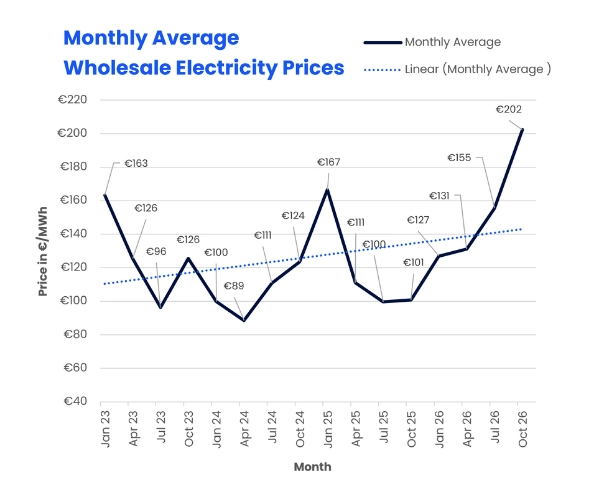
- Irish wholesale electricity prices averaged €202.37 per MWh in October 2026, 11.1% higher than the September 2026 average of €182.15 per MWh.
- Wholesale electricity prices have continued to rise since March 2026, driven by higher natural gas prices and reduced wind generation. With winter approaching, gas prices and wind output will remain the main drivers of Irish wholesale electricity prices.
- EirGrid forecasts adequate electricity generation capacity for winter 2026/27, reducing the risk of supply shortages and price spikes. This is a positive development for Irish businesses heading into the winter months.
- Electricity futures prices are lower for delivery beginning in March 2027, as the market anticipates lower energy costs after the winter peak. This supports our preference for shorter fixed contracts or wholesale trackers.
Wholesale Natural Gas Prices
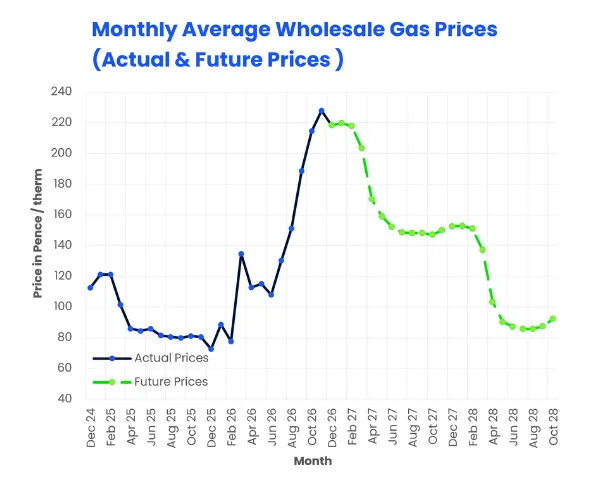
- UK wholesale natural gas prices, the key benchmark for the Irish market, are currently trading at 213.65 pence per therm on the day-ahead market. The EU TTF benchmark is €87.16 per MWh, equivalent to 213.09 pence per therm.
- EU gas storage currently stands at 75%, its lowest level for this time of year in over a decade. Lower reserves leave Europe more exposed to cold weather and increased LNG demand. This will keep upward pressure on wholesale gas prices throughout winter.
- European gas futures prices are considerably lower after winter 2026/27, reflecting expectations of improved supply conditions and reduced heating demand. This supports our view that current elevated gas prices will ease as we move towards spring.
- LNG supplies will play a critical role in European gas prices this winter. With storage levels below normal, Europe will rely more heavily on imported LNG, increasing competition with Asian buyers and keeping prices sensitive to changes in global demand.
Global Oil Commodity Prices
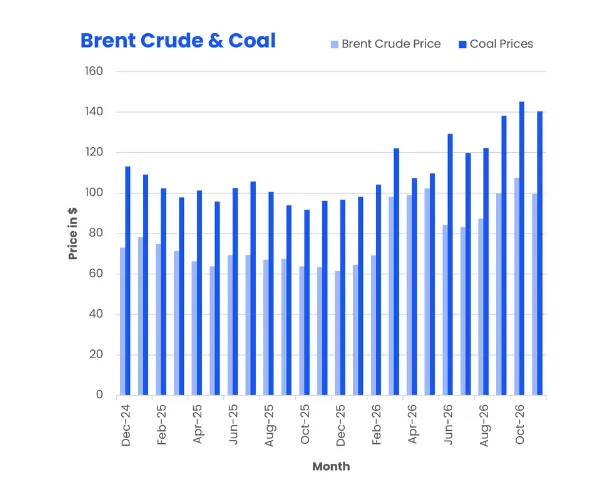
- Brent crude oil is currently trading at $95.38 per barrel, 7.28% lower than in October 2026. Oil prices have eased amid reduced tensions in the Middle East, although restricted shipping through the Strait of Hormuz continues to support prices.
- OPEC+ has extended its pause on oil production increases until December 2026. The decision restricts additional supply entering the market and supports higher oil prices despite the recent decline in Brent crude.
- Coal is currently trading at $138.95 per metric tonne, down 3.27% month-on-month but 46% higher than November 2025.
- Oil prices will remain sensitive to developments in the Middle East. A sustained recovery in shipping through the Strait of Hormuz would increase global oil supplies and ease pressure on prices, while continued restrictions will keep prices elevated.
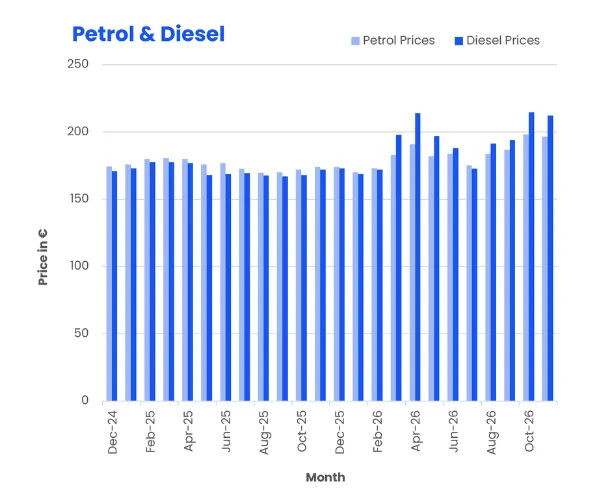
Petrol & Diesel Pump Prices in Ireland
- Average petrol prices in Ireland are currently €1.97 per litre, 0.79% lower than in October 2026 but 12.99% higher than November 2025.
- Average diesel prices in Ireland are currently €2.12 per litre, down 1.19% month-on-month but 23.37% higher than November 2025.
- The Government's decision to maintain reduced petrol and diesel excise duties until February 2027 is providing some relief for motorists and businesses. However, higher global oil prices continue to keep fuel costs well above last year's levels.
- The recent decline in crude oil prices is positive for petrol and diesel costs. We expect some of this reduction to feed through to Irish fuel pumps in the coming weeks, although retail prices typically adjust more slowly than wholesale markets.
What This Means for Your Business
- If your business is already on a fixed-price electricity or gas contract, movements in wholesale energy prices do not affect your contracted unit rate. No immediate action is required until your contract approaches renewal.
- If your electricity or gas contract is approaching renewal, we recommend comparing all options and suppliers. However, with wholesale prices elevated, we favour shorter fixed contracts or wholesale trackers, which offer greater flexibility if prices fall.
- Shorter fixed-price contracts provide certainty over energy costs during the coming winter. Wholesale trackers adjust monthly in line with market prices, allowing businesses to benefit quickly when prices fall.
- For large energy users, flexible purchasing offers another option. Buying electricity or gas in smaller blocks over time reduces reliance on a single market price and allows businesses to take advantage of lower prices when opportunities arise.