Wholesale Electricity Prices in Ireland
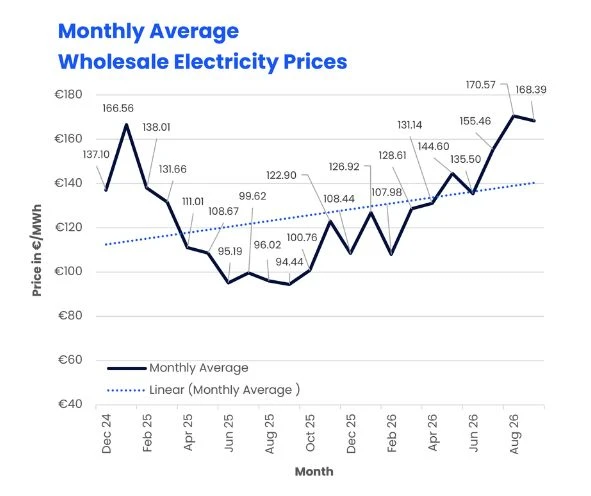
- Wholesale electricity prices in Ireland are currently trading at €168.39 per MWh, 1.3% lower than the August 2026 average of €170.57 per MWh.
- Despite the slight month-on-month reduction, new business electricity contracts are approximately 25% higher than this time last year, reflecting the sustained increase in wholesale energy prices since fighting broke out in the Middle East in March.
- Higher European natural gas prices have been a key driver of Irish electricity prices, with gas continuing to play an important role in electricity generation and wholesale price setting.
- Electricity demand in Ireland also continues to grow, driven largely by data centres, which account for 23% of metered electricity consumption. Continued growth in demand is expected to remain an important factor for the Irish electricity market.
Wholesale Natural Gas Prices
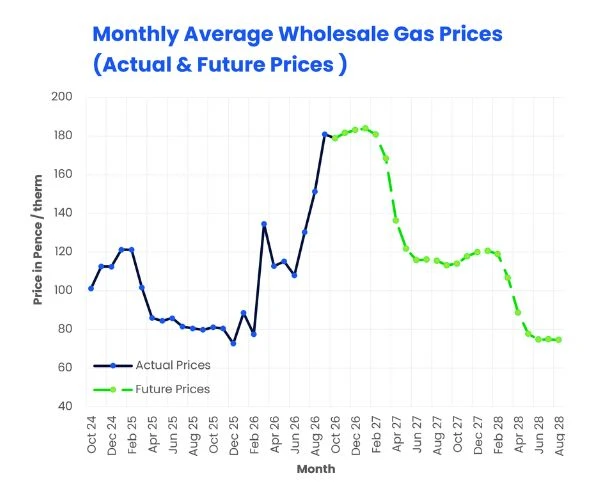
- Irish wholesale natural gas prices are currently trading at 180.64 pence per therm, based on the UK day-ahead market, while the EU TTF benchmark is €73.36 per MWh, equivalent to 184.61 pence per therm.
- European gas prices remain elevated due to tighter LNG supplies. Deliveries to Europe are restricted into early November, while planned maintenance is temporarily reducing Norwegian gas exports.
- EU gas storage stands at 66.6%, well below normal levels for this time of year. However, the European Commission has confirmed there is no immediate supply risk, with Europe now better prepared for winter.
- Forward gas prices are approximately 35% higher than this time last year, with new business gas contracts showing a similar increase. Middle East developments, LNG supply and winter demand will remain the key market drivers in the coming months.
Global Oil Commodity Prices
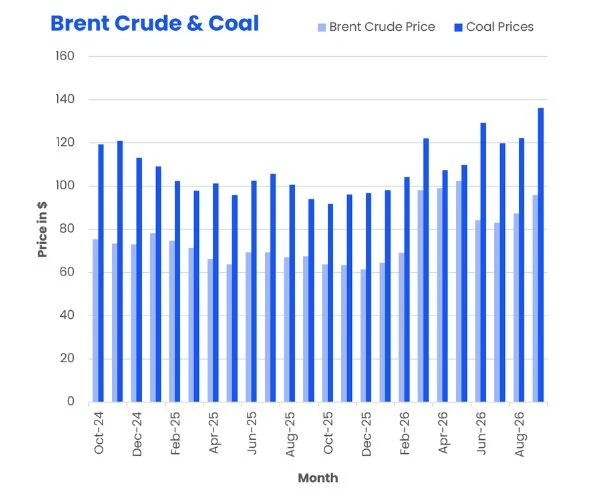
- Brent crude oil is currently trading at $95.99 per barrel, 9.7% higher than in August 2026. Renewed fighting between the US and Iran has disrupted oil flows through the Strait of Hormuz, pushing prices higher.
- OPEC+ agreed on 6 September to pause further production increases, maintaining September production targets through October. The decision follows several months of increased production as the group continues to assess global supply conditions.
- Coal is currently trading at $138.25 per metric tonne, up 11.4% month-on-month and 45.1% higher than September 2025.
- Coal prices remain supported by Asian demand and monsoon-related supply disruption. Coal India increased August supplies by 5.5% despite lower production, drawing on existing stockpiles to meet demand.
Petrol & Diesel Pump Prices in Ireland
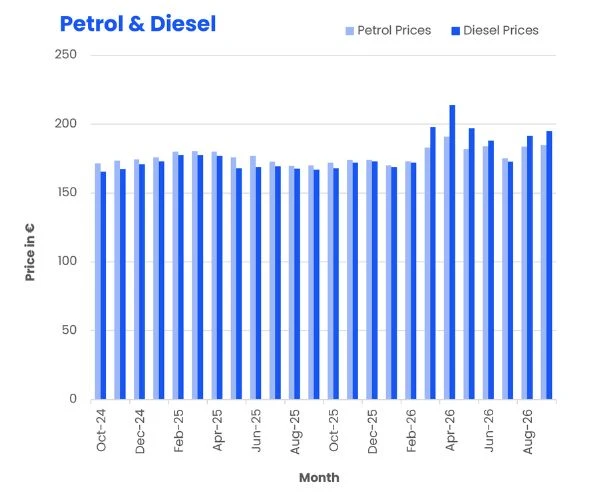
- Average petrol prices in Ireland are currently €1.85 per litre, 0.7% higher than in August 2026 and 8.8% higher than September 2025.
- Average diesel prices are currently €1.95 per litre, up 1.8% month-on-month and 16.8% higher than September 2025.
- The Government has deferred planned fuel excise increases due in September and October. Current reductions will remain until 31 October, with excise rates scheduled to be gradually restored between November 2026 and February 2027.
- Diesel prices are at risk of rising above €2 per litre, the level that triggered nationwide fuel protests last April. With prices rising again, industry representatives are calling for further fuel tax increases to be deferred.
What This Means for Your Business
- If your business has already secured a fixed-price electricity or gas contract with several months remaining, no immediate action is required.
- If your contract expires before the end of 2026 or in early 2027, we recommend starting the comparison process now. This gives you time to monitor pricing, compare all suppliers and make a considered decision before your current contract ends.
- Energy prices remain significantly higher than this time last year, but have been moving sideways in recent weeks. While uncertainty remains, there are currently no indications of a significant move higher or lower in the near term.
- With energy prices elevated, we recommend shorter fixed contracts or wholesale trackers rather than locking in higher prices for longer. Shorter contracts let you review pricing sooner, while tracker rates fall if wholesale energy prices decline.